

Our Neighborhood · Look closer
Old Dubai walking tour:
10 moments
worth slowing for.
A wind tower above the lane. A boat between two banks. A conversation that changes how you see the souk. Discover what makes exploring Old Dubai on foot so rewarding.
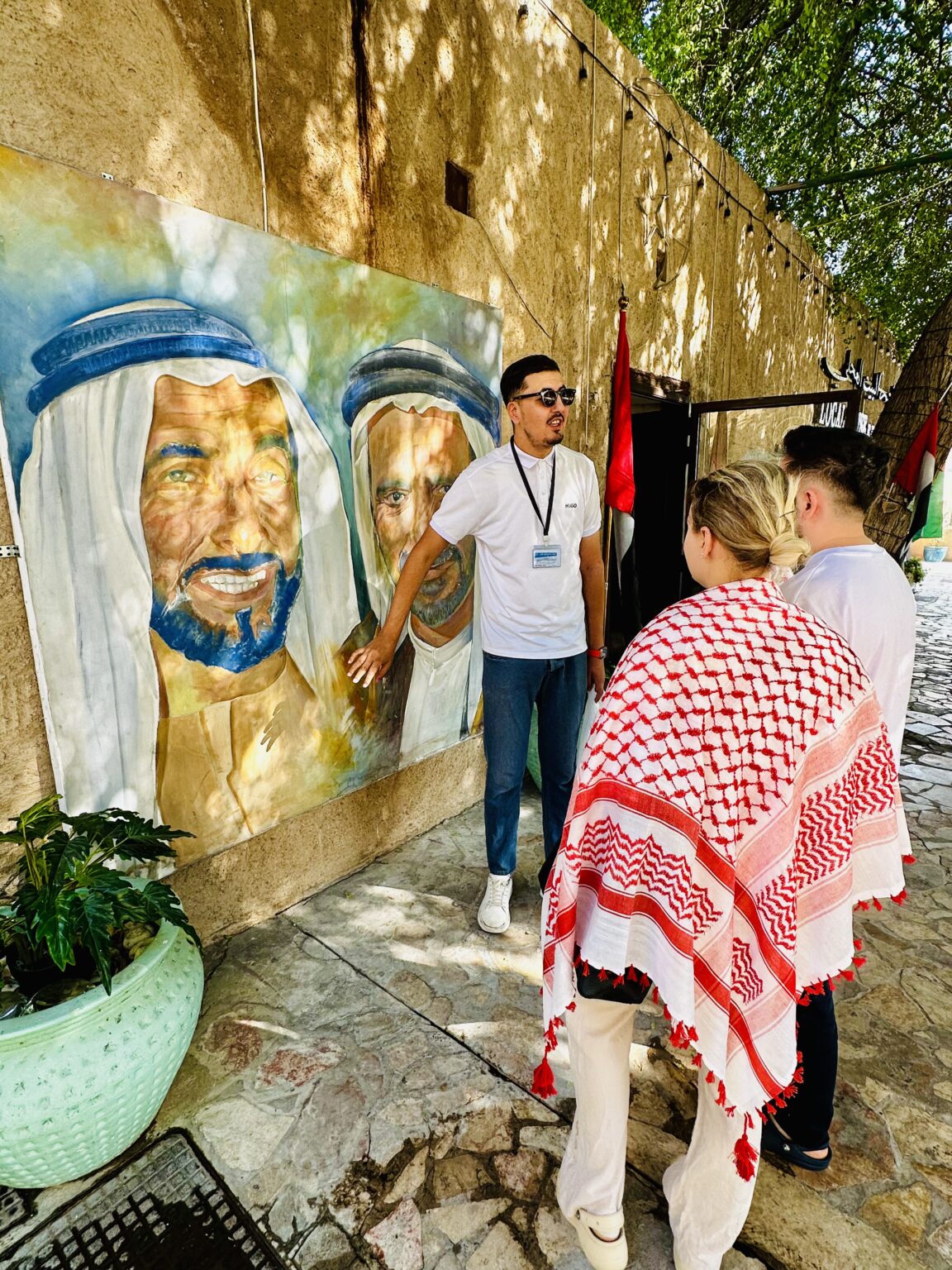
A good walk leaves you with more than a collection of photographs. You remember the question you asked, the ingredient you had never seen and the moment a familiar-looking building suddenly made sense.
An Old Dubai walking tour brings together Al Fahidi’s heritage streets, Dubai Creek and the markets of Deira. But the pleasure is in the details between the landmarks: looking up, stopping for a conversation and giving yourself time to understand what is around you.
Here are ten experiences to look for, whether you join a guide or explore independently. Some are easy to combine in one walk; others deserve extra time. We operate guided Old Dubai tours, and this article is an invitation to explore the neighbourhood, rather than a list of guaranteed inclusions on every departure.
What can you experience on an Old Dubai walking tour?
A rewarding first visit combines Al Fahidi, a traditional abra crossing and the Spice and Gold Souks. Add time for food, courtyards or a cultural programme according to your interests. Allow approximately 2–3 hours for the core walk; choose half a day if you want a meal or longer visits. Check your chosen tour’s route, duration and inclusions before booking.
Discover Al Fahidi through its wind towers
Start with the skyline at neighbourhood scale. Above the sand-coloured walls, the wind towers give Al Fahidi an instantly recognisable silhouette. Visit Dubai describes the district as a place to discover life in the city during the mid-19th century, with heritage buildings now accommodating cultural activities, galleries and other venues.
Instead of treating the area as a backdrop, choose a few details to investigate. How does a courtyard relate to the rooms around it? Why do some passages feel more sheltered than others? What has been restored, and how are the buildings used today? These questions turn a short walk into an introduction to the way the neighbourhood works.
For more context before you arrive, read our guide to Al Fahidi, Dubai Creek and the souks.
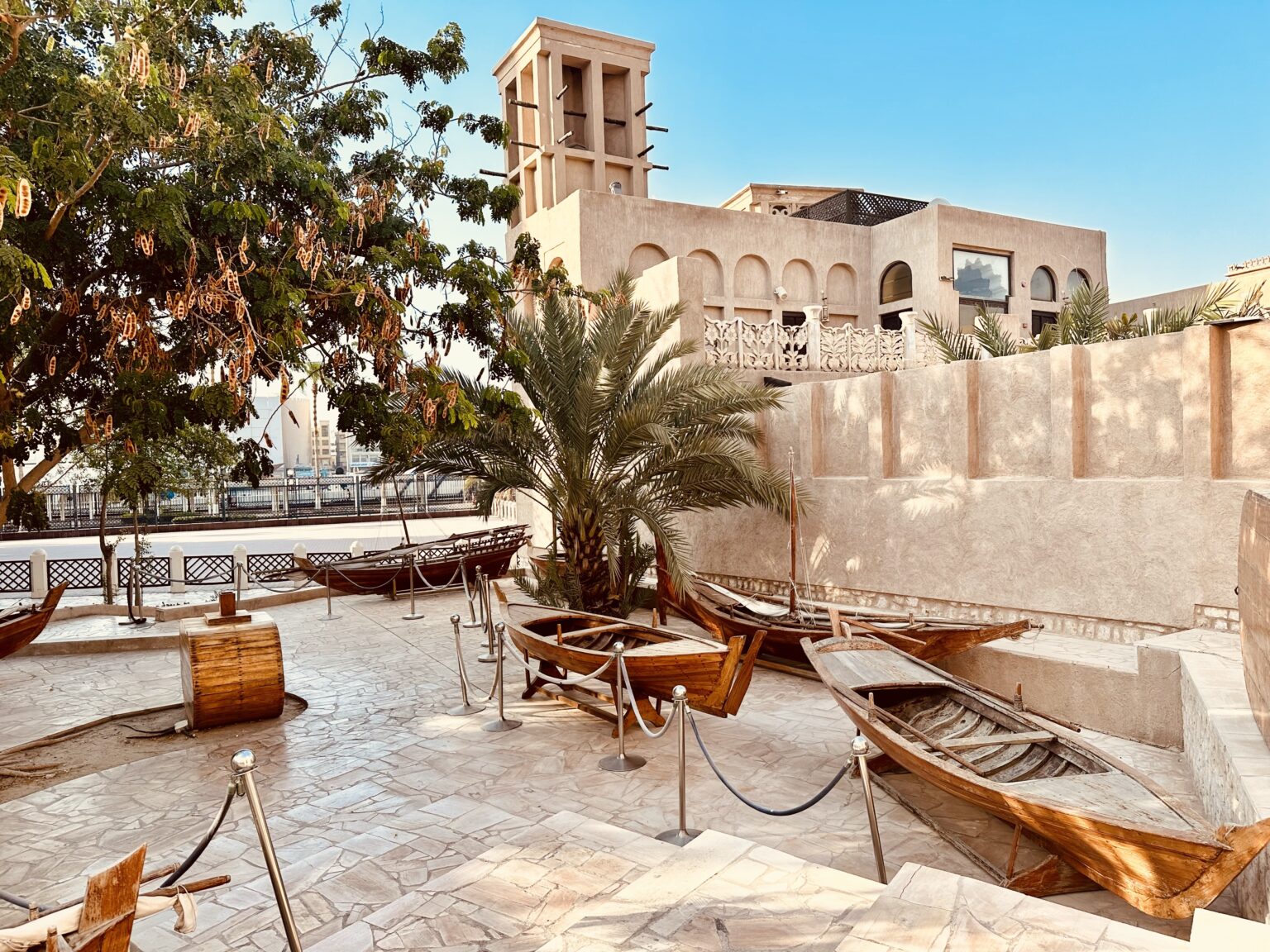
Find a courtyard worth staying in
It is tempting to fill every minute with movement. In Al Fahidi, a pause can be the most rewarding part of the visit. A courtyard café or gallery gives you somewhere to sit, absorb the surroundings and decide what you want to explore next.
XVA’s hotel, gallery and café is one address to consider when planning this part of your day. If breakfast is your priority, our Arabian Tea House guide explains the Al Fahidi branch and its food options.
Pick one stop rather than trying to sample every café. Check opening arrangements and allow time for service. Courtyards may belong to working businesses or private premises, so follow the venue’s access rules and ask before photographing people.
Ride an abra across Dubai Creek
The crossing gives your walk a natural change of pace. You leave the lanes, step aboard and see the neighbourhood from a different angle. From the water, it becomes easier to understand the relationship between Bur Dubai and Deira.
The RTA lists the traditional Bur Dubai Abra Station–Deira Old Souq Abra Station crossing at AED 1 per passenger, per trip, paid in cash. This is a short public transport crossing. Modern abra routes and private cruises are separate services with different fares.
Confirm the destination before boarding, carry small cash and follow the operator’s instructions. If you are joining a guided tour, check whether the crossing is included in your selected option.
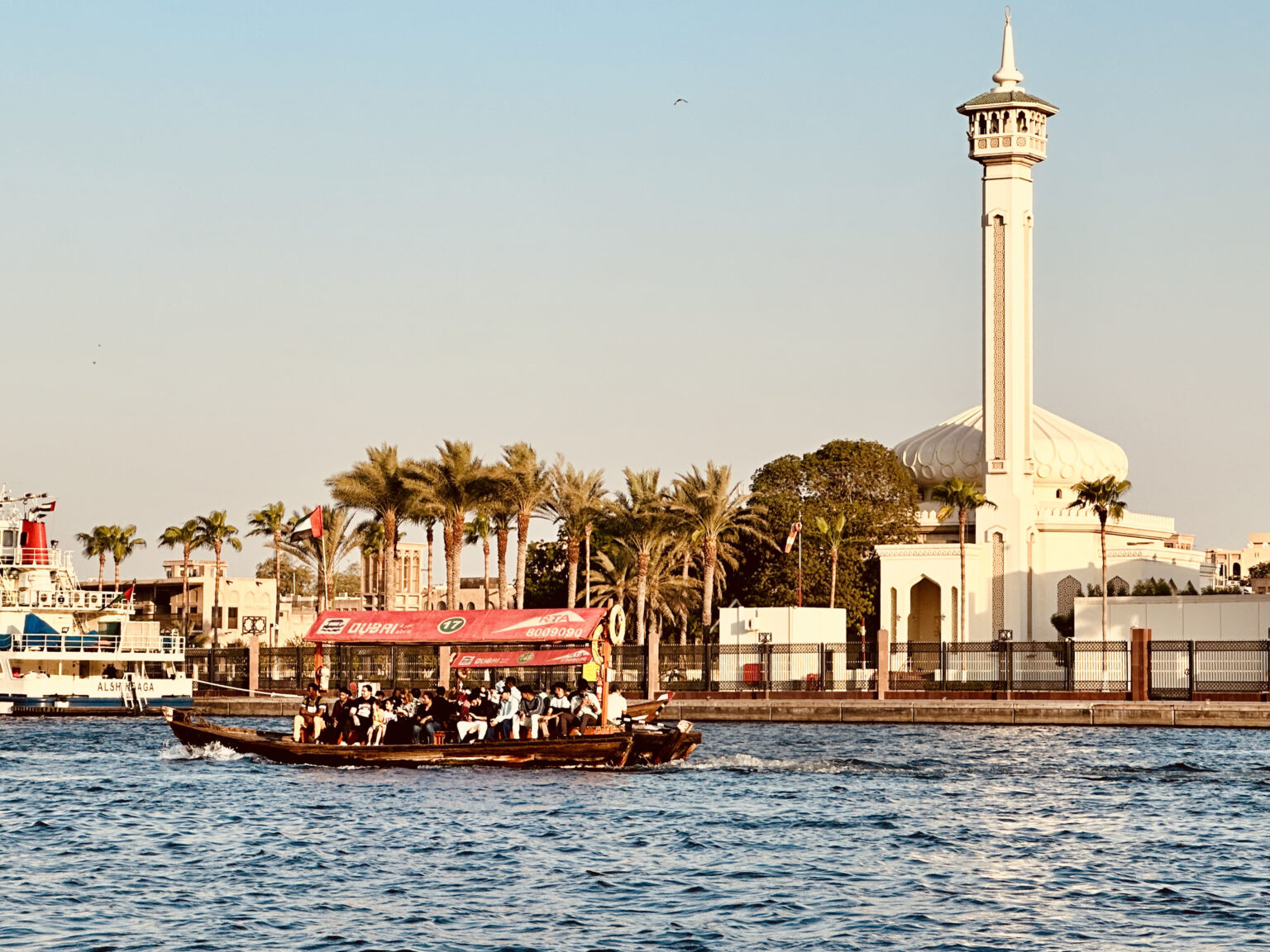
Before you cross: check the RTA’s official marine transport information for the service you intend to use. Not every boat beside the Creek follows the same route.
Turn the Spice Souk into a conversation
Colour catches your attention first. Then come the names on the containers, the unfamiliar ingredients and the question of what you would actually cook with them. The Spice Souk becomes much more interesting when you ask a seller to explain one product rather than trying to identify everything at once.
Choose an ingredient you recognise and another you do not. Ask how each is used, whether a blend contains additional ingredients and how it should be stored. A simple conversation can be more useful than buying a large bag because it looked photogenic.
If you decide to shop, request a price for a clearly stated weight. Compare the same quantity between sellers and ask for labelled packaging. Before taking food or plant products home, check the entry rules for your destination.

Explore the Gold Souk without rushing to buy
You do not need a jewellery budget to enjoy the Gold Souk. Walk through the covered lanes, look at the variety of designs and notice how different pieces are presented. Even a short visit can be rewarding when you give yourself permission to browse without purchasing.
If something does catch your eye, slow the visit down. Ask about the item’s purity, weight, making charges and final payable price. Request the details in writing and confirm the shop’s exchange terms before paying. A busy sightseeing schedule is a poor reason to hurry an expensive decision.
Our Gold Souk Dubai guide goes further into shopping questions and practical planning. Use it if jewellery is one of the main reasons for your visit.

Explore the neighbourhood with a guide and bring your questions.
Learn to shop in the souks with confidence
A market visit is easier when you decide what you want before discussing the price. Are you looking for a souvenir, a useful ingredient or a carefully chosen piece of jewellery? Each deserves a different amount of time and a different set of questions.
Where bargaining is welcome, stay friendly and compare equivalent products. Confirm the material, quantity and final amount rather than concentrating only on the size of the discount. A dramatic reduction does not tell you whether the original quote was reasonable.
You can also decline. A simple “No, thank you” is enough if you want to keep walking. A guide can help explain the process, but nobody can guarantee the lowest price in every shop. The goal is a purchase you understand and feel comfortable making.
A useful question: “What exactly is included in that price?” Ask it before a product is weighed, packed or customised.
Discover Emirati food and Old Dubai’s wider food culture
Food makes a natural pause in a walking tour, but it also opens another conversation. Ask what a dish is called, what is in it and how it is usually served. You may find yourself learning as much from the answer as from the first bite.
For an Emirati breakfast or a longer meal, Arabian Tea House in Al Fahidi is one address to research. The wider neighbourhood also reflects many communities and culinary traditions. A snack bought in Old Dubai is not automatically an Emirati dish; that diversity is part of what makes the area interesting.
Decide whether you want a few tastings or a full meal. They require different amounts of time. For a booked food experience, check the named inclusions and tell the operator about dietary needs in advance. Discuss allergies with the people preparing the food.

Add a waterfront pause at Al Seef
Near Al Fahidi, Al Seef offers another way to spend time beside the Creek. Its waterfront setting, cafés and shops make it a possible extension before or after exploring the heritage neighbourhood.
There is an important distinction: Al Seef’s heritage-style spaces recreate an older architectural atmosphere within a modern destination. They should not all be described as original historic buildings. The contrast between Al Fahidi and Al Seef is itself worth noticing: one helps you explore preserved heritage, the other shows how heritage is interpreted in a contemporary setting.
If your tour finishes across the Creek in Deira, remember that Al Seef is on the Bur Dubai side. Work it into your day deliberately rather than assuming it will be beside your final stop. See the official Souk Al Seef guide for the destination’s own description.

Explore local culture through conversation
The best question on a tour is often the one you were unsure about asking. A respectful conversation can help you understand hospitality, everyday customs and the role of faith in the neighbourhood without reducing them to a list of rules.
If you want a dedicated cultural experience, the Sheikh Mohammed bin Rashid Al Maktoum Centre for Cultural Understanding offers public programmes in and around Al Fahidi. Its published Heritage Tour describes a visit to the Diwan Mosque. Check the current programme, booking conditions and visitor guidance directly with the centre.
A mosque interior visit is not automatically part of a general souk walking tour. Nor should a place of worship be treated as a stop you can enter without checking access. If the call to prayer occurs during your walk, listen respectfully and let your guide explain the setting.
Hear the stories that connect Old Dubai
By the end of the walk, the places should begin to connect. A courtyard is more than a pretty photograph. The Creek is more than a boat ride. A market is more than a place to bargain. Together, they raise questions about homes, work, travel and the relationships between people.
This is where a guide can add value: by helping you connect what you have seen and giving you room to ask follow-up questions. Choose a tour for its explanations, pace and approach, as well as its list of stops.
For a more detailed route, our first-time visitor’s Old Town Dubai itinerary explains how to organise the walk across both banks. This article gives you the reasons to slow down along the way.
Which Old Dubai walking experience suits you?
| Your priority | What to look for |
|---|---|
| A first introduction | A clear Al Fahidi–Creek–souks route with time for questions. |
| Emirati culture | A guide with strong cultural explanations, or a separately booked cultural programme. |
| Food | Specific tastings or meals listed as inclusions, with dietary requirements discussed. |
| Shopping | Enough browsing time and transparent purchase advice. |
| A personal pace | A private option with flexibility agreed before booking. |
For a focused introduction, allow around two to three hours in the area. Add time for a restaurant meal, galleries or a cultural programme. These are editorial planning suggestions; use the duration and meeting arrangements of your selected departure when booking.
- Check the route: does it visit both Bur Dubai and Deira, and include the abra?
- Check the inclusions: distinguish tastings, meals, entrance fees and hotel transport.
- Check the fit: confirm language, group size, walking requirements and any mobility needs.
- Check the meeting instructions: use the exact pin in your confirmation rather than searching only “Old Dubai”.
Wear comfortable shoes, carry water and plan for the weather. A private tour may offer more flexibility, but changes to route, pace or transport should be agreed in advance. You can compare the available options on our Old Dubai experiences page.
Old Dubai walking tour FAQs
Is an Old Dubai walking tour worth it?
It is a good fit if you enjoy neighbourhoods, markets and cultural context. A guide can help connect the stops and answer questions. If you prefer exploring at your own pace, the same public areas can also be visited independently.
Are these ten experiences included in every tour?
No. They are ideas for exploring Old Dubai. Al Seef, restaurant meals, galleries and organised cultural programmes may require additional time or separate bookings. Read the inclusions for your specific experience.
Can I see Al Fahidi and the souks in one walk?
Yes. A common sequence starts in Al Fahidi on the Bur Dubai side, crosses the Creek by abra and continues to the Spice Souk and Gold Souk in Deira. Allow extra time if you plan to shop or eat.
How long should I allow?
Plan roughly two to three hours for a focused walk, or half a day with optional stops. Your selected tour may have a different duration, and travel to the meeting point needs its own allowance.
Can I explore Old Dubai without buying anything?
Yes. You can enjoy the architecture, the Creek and the market displays without shopping. Politely decline offers when you are not interested.
Is the traditional abra included?
That depends on your booking. Independently, the RTA lists the traditional Bur Dubai–Deira Old Souq crossing at AED 1 per person per trip, paid in cash. Other services have different fares.
Will we go inside a mosque?
Only if your booked programme specifically includes it. General walking tours do not automatically provide mosque access. Check the named venue, admission arrangements and dress guidance in advance.
Is this suitable for families or visitors with mobility needs?
Discuss your requirements before booking. Heat, standing time, thresholds and abra boarding can affect comfort and access. Ask about the actual route and available adaptations rather than assuming every stop is accessible.
Sources and planning references: Visit Dubai: Al Fahidi; RTA: abra services; Souk Al Seef; SMCCU public programmes. Checked 7 November 2026. Optional experiences and time allowances are editorial suggestions; confirm live arrangements with the relevant operator.
Beyond the skyline
Come for the souks.
Stay for the stories.
Explore Old Dubai with a guide, ask the questions that interest you and discover the details between the landmarks.