
Our Neighborhood · The first-time visitor’s guide
Old Town Dubai tour:
follow the Creek,
find the city.
Al Fahidi’s courtyards, a wooden abra and the souks of Deira. Here is how to turn a few hours in Old Dubai into a visit that makes sense — with time to look, taste and ask questions.

The boat pulls away. For a moment, the shop windows disappear and Dubai becomes water, wooden benches and two busy banks facing each other. That small crossing is the thread that holds this walk together.
An Old Town Dubai tour works best when you understand how its stops connect. Al Fahidi introduces the neighbourhood’s architecture. The Creek explains why people came here to trade. The souks show that exchange continuing, through textiles, spices, jewellery and everyday conversation.
This is a practical guide to planning your first visit: what to see, how long to allow, where to cross the water and when a guide is worth choosing. We operate Old Dubai walking tours; the independent route below is our suggested plan, not a promise that every bookable departure follows identical timings or includes every optional stop.
For a first Old Dubai tour, start in Al Fahidi Historical Neighbourhood, continue towards the Textile Souk in Bur Dubai, cross Dubai Creek by abra, then explore the Spice Souk and Gold Souk in Deira. Allow around 2–3 hours for a focused visit, or half a day if you want a sit-down meal, galleries and unhurried shopping. These are planning suggestions; your walking pace and stops will change the total.
Where is Old Town Dubai?
For this itinerary, “Old Town Dubai” means the historic districts around Dubai Creek: Bur Dubai on one bank and Deira on the other. Al Fahidi sits on the Bur Dubai side; the Spice Souk and Gold Souk are across the water in Deira. Think of an interconnected area rather than a single attraction with one entrance.
When booking a taxi or checking a tour meeting point, use the exact landmark. Searching only “Old Town” can lead to confusing results, including addresses around Downtown Dubai. For this walk, your starting point is Al Fahidi Historical Neighbourhood, Bur Dubai, not the Burj Khalifa area.
Al Fahidi, Al Seef and Deira: what is the difference?
Al Fahidi is the heritage neighbourhood of narrow lanes, restored houses and wind towers. Al Seef is a nearby waterfront development combining heritage-inspired and contemporary areas. It makes a pleasant optional extension, but its old-style architecture should not be confused with the age of Al Fahidi’s historic buildings. Deira is the district across the Creek where this itinerary ends among the markets.
If you want more architectural detail before visiting, read our guide to Al Fahidi, the Creek and the souks. Here, we concentrate on the decisions that make a first visit easier.
An Old Dubai itinerary for 2–3 hours
Follow the route in this order to avoid repeatedly crossing the Creek. The outline below totals roughly two hours of visits and transitions, with an extra buffer for waiting, photographs and browsing. A proper restaurant meal or a serious jewellery purchase needs additional time.
| Stage | Time to allow | What to focus on |
|---|---|---|
| Al Fahidi | 30–40 minutes | Lanes, wind towers and a courtyard pause. |
| Walk towards the Textile Souk | 20–25 minutes | Bur Dubai’s shopping streets and fabrics. |
| Reach the dock and cross | 15–20 minutes | Finding the correct abra, waiting and boarding. |
| Spice Souk | 20–25 minutes | Compare aromas, ingredients and prices. |
| Walk to the Gold Souk and browse | 25–35 minutes | Jewellery windows and the covered market. |
These allowances add up to 110–145 minutes. Keep the rest of a three-hour window flexible. Shops, refreshments and children’s breaks can quickly fill it. If you only have 90 minutes, choose Al Fahidi and the Creek, or the two Deira souks, rather than racing through everything.
Save two map pins before leaving: your starting point in Al Fahidi and your chosen finish in Deira. This is a one-way walk; the end is not automatically next to your original taxi drop-off.
Start your Old Town Dubai tour in Al Fahidi
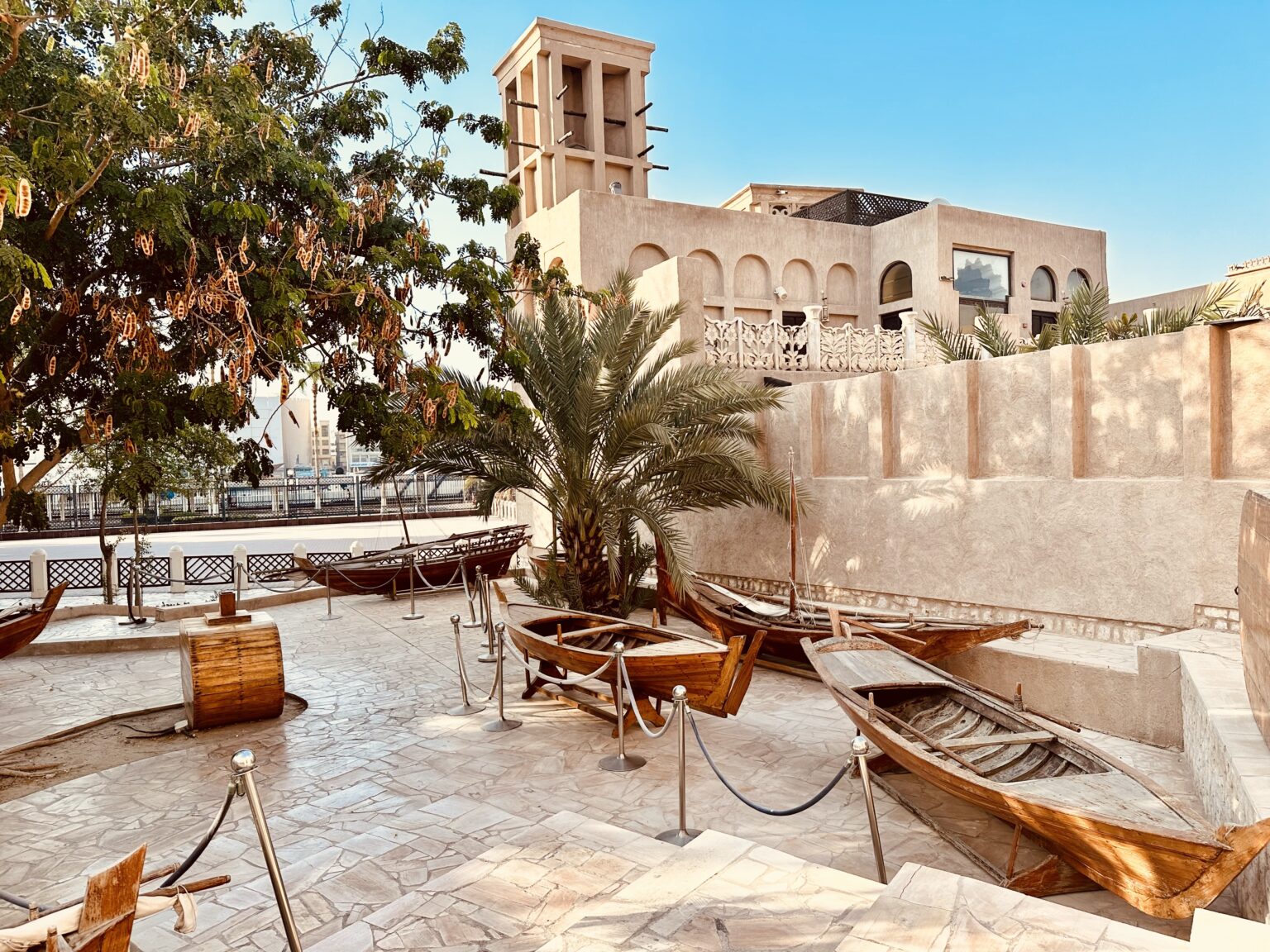
Before the market stalls compete for your attention, spend time with the buildings. Visit Dubai describes Al Fahidi as a place to discover life in the city during the mid-19th century. Its wind towers and enclosed courtyards give you something concrete to look at while exploring the area’s history.
Instead of trying to enter every doorway, choose a short loop through the lanes. Look up at the towers, notice how the streets narrow, and compare the quieter courtyards with the activity nearer the waterfront. Some interiors house businesses and cultural venues; an open lane does not mean every room is freely accessible.
Make room for one meaningful stop
A gallery, a drink or a cultural programme can give the neighbourhood more depth than a long list of photo stops. Our XVA guide introduces the hotel, gallery and courtyard café. For a meal, see our Arabian Tea House guide. Check individual opening arrangements before building your day around an interior visit.
Continue towards the Textile Souk
The Textile Souk, often called the Old Souk in Bur Dubai, introduces another side of the walk: fabric, clothing and souvenirs. Browse before buying. If you are considering a shawl or a piece sold as silk or cashmere, ask about its composition and care instructions rather than relying on how it feels for a few seconds.
Keep this section short if the Gold Souk is your priority. It is easy to spend the whole morning browsing the first market and arrive at the rest of the route hungry or tired.
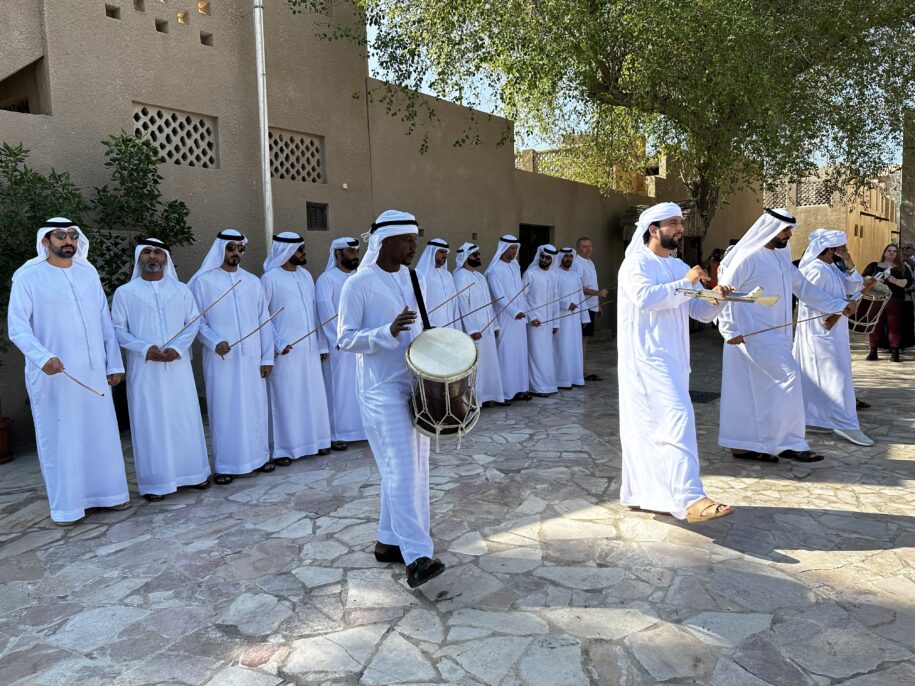
The cultural performance pictured at the top of this article is an editorial image from Old Dubai. A performance is not a scheduled or guaranteed inclusion in the walking itinerary.
Cross Dubai Creek by traditional abra
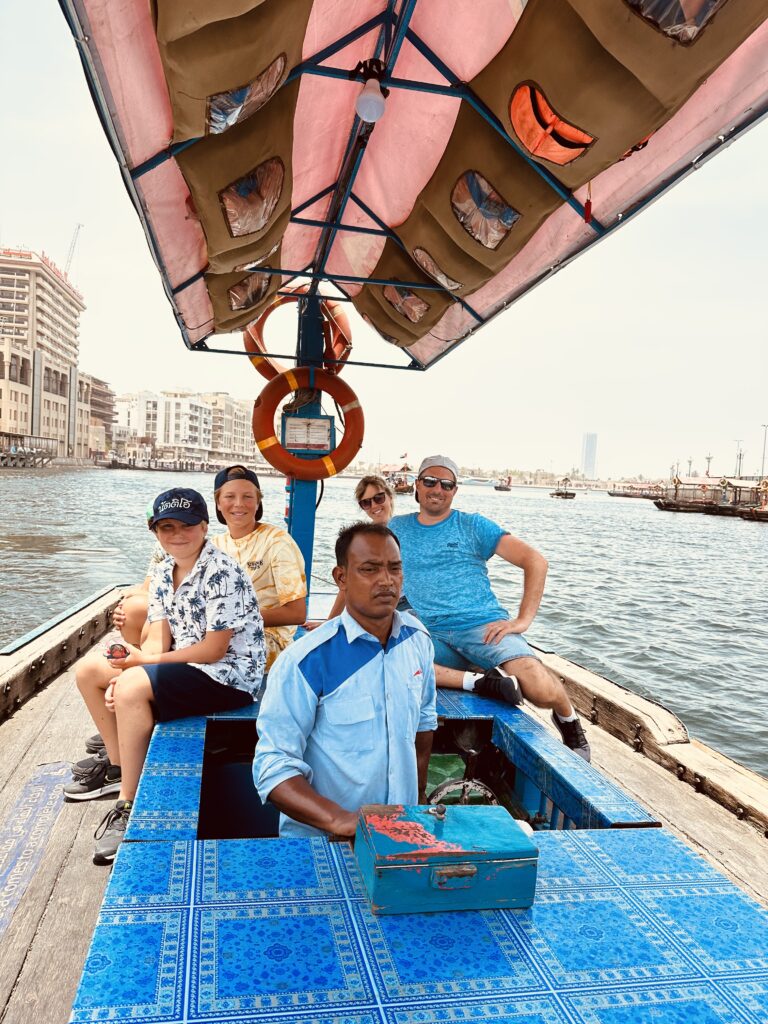
For this route, look for the traditional abra between Bur Dubai Abra Station and Deira Old Souq Abra Station. The RTA lists this crossing at AED 1 per passenger, per trip, paid in cash. It is a short transport crossing, not an hour-long sightseeing cruise.
Carry small cash, confirm the destination before boarding and follow the operator’s instructions. Do not assume that every boat beside the Creek uses the same fare or goes to the same landing. Modern abra routes and private charters are different services.
The RTA’s marine transport information distinguishes traditional AED 1 crossings from other services, including AED 2 modern routes. Check the station signs and current service information on the day.
The water gives you a useful pause between two busy parts of the visit. Put the phone down for a minute and look back towards the bank you have just left. Then, once ashore in Deira, find your bearings before heading into the market lanes.
Which Dubai souks should you visit?
“Dubai souk” is a broad search: the markets do not all sell the same things or sit in the same neighbourhood. For a first visit on foot, the combination of Textile Souk, Spice Souk and Gold Souk gives you variety while keeping the route connected by the Creek.
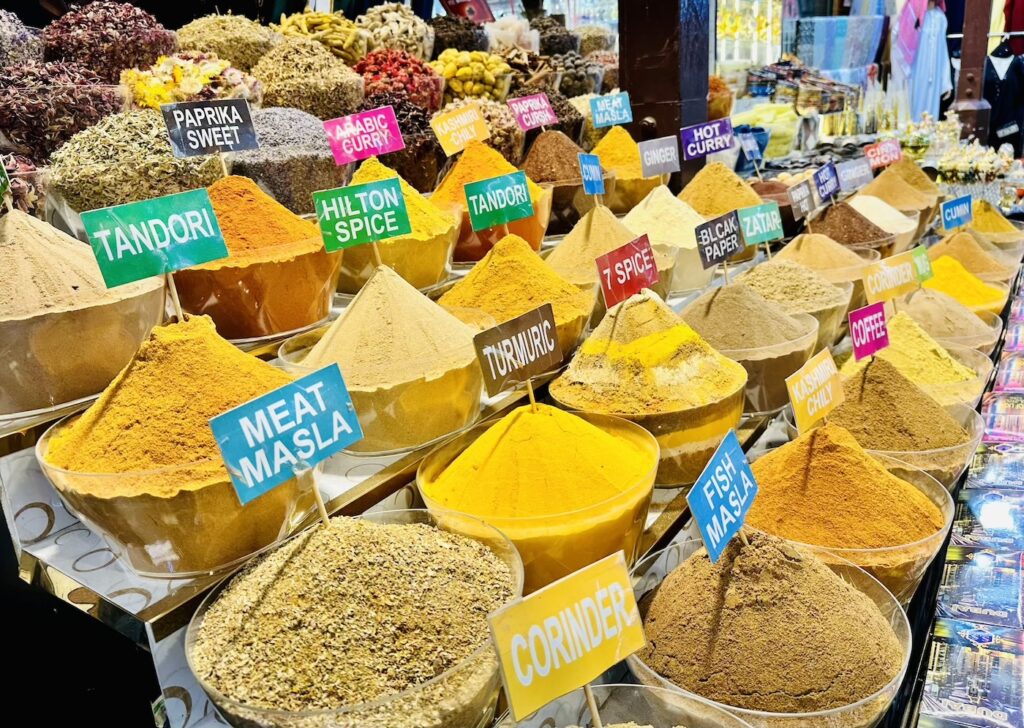
Spice Souk: ask what is in the bag
Slow down at the stalls that interest you instead of accepting the first invitation to buy. Ask the seller to name an ingredient, explain how it is used and quote a price for a specific weight. A small bag can look generous until you discover that the quoted price applies to a different quantity.
For blends, ask what they contain. For gifts, request clear labels and secure packaging. If you are travelling internationally, check your destination’s rules before buying food, seeds or other plant products. You do not have to buy anything to appreciate the market.
Gold Souk: browse first, decide later
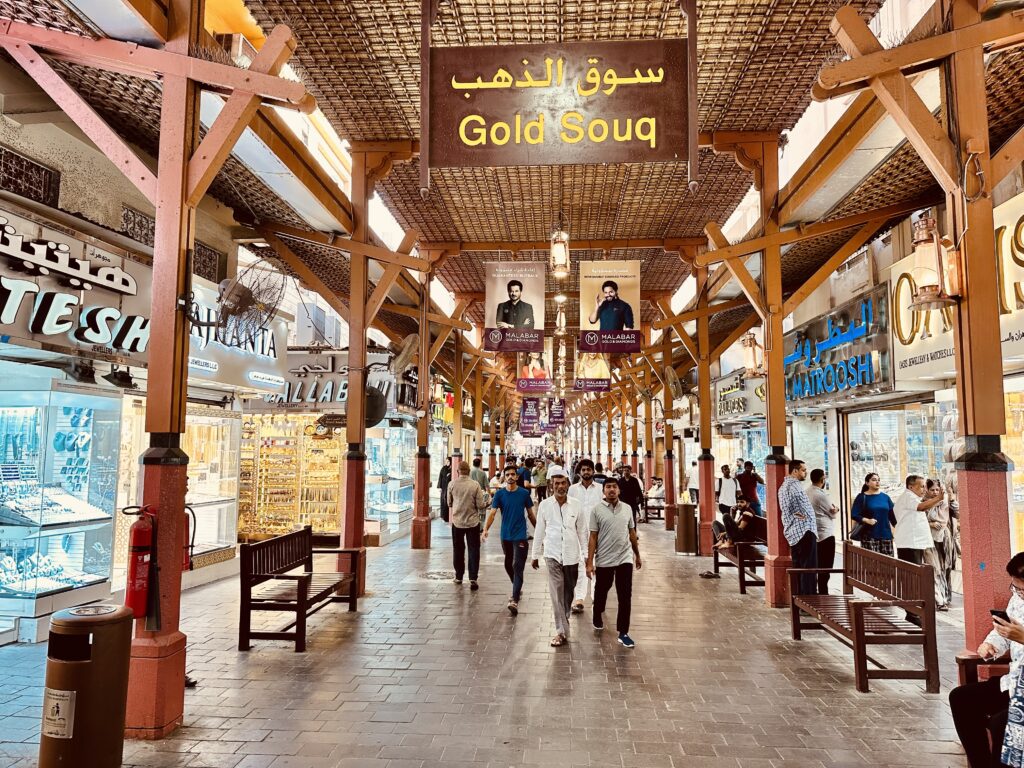
The Gold Souk is worth walking through even when jewellery shopping is not on your list. Give yourself time to compare the scale of the displays and the different designs. If you are buying, separate sightseeing from the purchase decision: sit down, ask questions and request an itemised quotation.
Ask the retailer to explain the piece’s purity, weight, making charges and total payable amount. Confirm what documentation you will receive and the shop’s exchange terms before paying. For the fuller shopping checklist, read our Gold Souk Dubai guide.
How to browse without feeling pressured
A polite “No, thank you” is enough when you are not interested. Keep moving if you want to continue the walk. If you do want to negotiate, compare equivalent products and agree on the final amount before an item is packed. A guided tour should help you understand the market; it does not make every purchase automatically good value.
Food on an Old Dubai tour: tastings or a meal?
First decide whether you want a few tastes along the route or a proper meal. They are different experiences. A walking tour with refreshments may fit a compact morning; a leisurely restaurant lunch belongs in a half-day plan.
For an Emirati meal in Al Fahidi, Arabian Tea House is one option to research before visiting. Elsewhere along the route, use a food stop to ask about a dish’s ingredients and background. Old Dubai’s food scene reflects many communities; a snack sold locally is not necessarily an Emirati speciality.
When booking a food-inclusive tour, read exactly what is included. “Tastings” does not necessarily mean lunch, unlimited drinks or a restaurant table. Tell the operator about dietary requirements before booking, and confirm allergies directly with whoever prepares the food. If you want a meal before meeting your guide, leave time for both service and the walk to the meeting point.
See the available experiences, departure times and inclusions.
Guided Old Dubai tour or a self-guided walk?
You can explore the neighbourhood independently. A guide is especially useful when your priority is context: understanding what you are looking at, asking cultural questions and connecting the architecture, waterways and markets into one story.
| Format | Best fit | Check first |
|---|---|---|
| Self-guided walk | You enjoy navigation and want long, spontaneous stops. | Route, heat, transport and individual venue access. |
| Shared walking tour | You want guided context on a scheduled departure. | Language, group size, walking pace and inclusions. |
| Private tour | You want to discuss your group’s interests and practical needs. | How much the itinerary can change, pickup and accessibility. |
What makes a good Old Town Dubai tour?
Look for a clear route and specific inclusions. Does the tour actually visit both banks? Is the abra included? How much time is spent in shops? Are refreshments named? Is hotel transport part of your selected option? A good description should let you answer those questions without guessing.
Also consider your interests. Someone curious about architecture may want more time in Al Fahidi. A keen jewellery shopper needs a longer stop in Deira. A family may value frequent breaks more than another landmark. Tell the operator what matters before booking rather than expecting every tour to suit every traveller.
Our Old Dubai tour booking page lists the available options. For the group option without pickup, the published meeting landmark is Arabian Tea House in Al Fahidi. Always follow the exact meeting instructions on your confirmation; meeting outside a restaurant does not itself include a meal there.
How much time and money should you allow?
Use a flexible budget rather than treating Old Dubai as one admission ticket. Walking through the public neighbourhood lanes and browsing the souks does not require a single combined attraction pass. Transport, refreshments, paid venues, shopping and guided services are separate decisions.
| Expense | How to plan |
|---|---|
| Traditional abra crossing | AED 1 per person, one way, on the specified traditional route; carry cash. |
| Getting to and from the area | Budget separately for metro or taxi journeys, including your return from Deira. |
| Food and drinks | Decide between a snack stop and a restaurant meal; check menus before ordering. |
| Culture and interiors | Check the individual venue’s admission and opening arrangements. |
| Guided tour | Use the live booking price for your date and chosen option. |
| Shopping | Set your own limit; purchases are optional. |
Morning or late afternoon?
For a relaxed self-guided visit, choose your time around comfort and priorities. Morning suits a breakfast-first plan; later in the day can suit a market-focused walk followed by dinner. Very early starts may find individual shops still closed, while midday can make exposed sections uncomfortable.
In hotter weather, shorten the route and build in indoor breaks. If you have a fixed guided departure, plan around that confirmed start time. Souks contain independent businesses, so avoid assuming there is one opening schedule for every shop. Fridays, holidays and Ramadan can change individual arrangements.
If you have half a day
Add one substantial stop: a cultural visit, a gallery, a meal or a longer shopping session. Al Seef can extend the waterfront portion near Al Fahidi. Do not add every possible detour and still expect a two-hour walk. The most enjoyable plan usually leaves something for another visit.
How to get to Al Fahidi and leave from Deira
By metro
Sharaf DG on the Green Line is a useful station for an Al Fahidi start. Allow additional walking time from the station to your exact meeting point. Al Ras, also on the Green Line, is an option to check for the Deira part of your visit. Compare your final shop or landmark with the station entrance on a map before setting off.
The official RTA metro map is the right reference for station names and connections. Use current journey planning for service times rather than an old blog timetable.
By taxi
Give the driver the exact Al Fahidi landmark or send the meeting pin. Include “Bur Dubai” when explaining the destination. Leave a buffer for traffic, finding the entrance and walking from a vehicle-accessible street. A taxi cannot necessarily drop you at every courtyard doorway.
Getting back after the souks
You will finish on the Deira side. Choose a taxi pickup point or a metro station from there, or cross back if you deliberately want to return to Bur Dubai. Do not assume hotel pickup also means hotel drop-off: check the transport arrangements for your specific booking.
Open Al Fahidi on Google Maps ↗ Open the Gold Souk on Google Maps ↗
Before you go
Wear walking shoes
Choose footwear you can stand in comfortably. You will spend time looking and listening as well as moving.
Carry water and sun protection
Shade varies along the route. Bring what you need rather than relying on a shop appearing exactly when you want one.
Ask before photographing people
A market is also somebody’s workplace. Ask before taking close portraits or photographing inside a shop.
Keep shopping optional
Decide whether you are browsing or buying. You can enjoy the souks without making a purchase.
Check mobility needs in advance
Steps, thresholds, uneven sections and boarding conditions can affect the route. Discuss your exact needs with the operator before booking.
Plan children’s breaks
Short visits, refreshments and one or two things to look for can work better than a long checklist. Keep children close at the docks.
Old Town Dubai tour FAQs
Is Old Town Dubai the same as Old Dubai?
In many travel itineraries, both refer to the historic areas around Dubai Creek, including Al Fahidi, Bur Dubai and Deira. Use exact landmark names when navigating because “Old Town” can also appear in addresses elsewhere in Dubai.
What does an Old Dubai tour usually cover?
A route may combine Al Fahidi, a Creek crossing and the Deira souks. Some add food tastings, the Textile Souk or cultural venues. Check the published itinerary: these stops and inclusions are not identical across all tours.
How long do you need for an Old Town Dubai tour?
Allow around 2–3 hours for the core walk described here. Set aside half a day for a restaurant meal, galleries or substantial shopping. A booked tour has its own duration, which may not include hotel travel time.
Can you visit Old Dubai without a guide?
Yes. Save your route and transport details, check venue access and allow breaks. A guide can add context and help with the transitions, particularly if you want to ask questions about the neighbourhood.
Which Dubai souk should I visit first?
Starting in Al Fahidi, visit the Textile Souk on the Bur Dubai side before crossing towards the Spice Souk and Gold Souk in Deira. If you are already staying in Deira, reversing the route may be more convenient.
How much does the Dubai Creek abra cost?
The RTA lists AED 1 per passenger per trip, paid in cash, for its traditional crossing between Bur Dubai and Deira Old Souq. Other abra routes and private cruises have different fares; confirm your service at the station.
Is food included in an Old Dubai walking tour?
Only if your selected tour says so. Check whether it includes named tastings, drinks or a full meal, and discuss dietary needs before booking. A restaurant meeting point is not evidence of a meal inclusion.
Is an Old Dubai tour suitable for children?
It can be, with a manageable duration, breaks and attention to the weather. Check your operator’s age conditions and consider how your child handles walking and boat boarding.
Is the route wheelchair accessible?
Do not assume the complete route or traditional abra is accessible. Describe your requirements to the operator and confirm the specific streets, stops and crossing. An adapted itinerary may be needed.
Can I combine Old Dubai with Downtown Dubai in one day?
Yes, if you allow time to travel between the areas and rest. Give the Old Dubai walk its own morning or afternoon rather than treating the souks as a quick stop beside Dubai Mall.
Where does your Old Dubai tour meet?
The published group option without pickup uses Arabian Tea House in Al Fahidi as its meeting landmark. Pickup options have different arrangements. Your booking confirmation contains the instructions to follow.
Do I need to buy anything in the souks?
No. Browsing is part of the experience. If you decide to shop, confirm the product, quantity, total price and receipt before paying.
Planning sources: Visit Dubai: Al Fahidi; Dubai’s souks; Al Seef; RTA abra routes and fares; RTA metro map. Information checked 7 November 2026. Suggested time allowances are our editorial recommendations, not live transport or tour schedules.
Walk the neighbourhood with us
A few hours.
A different Dubai.
Let the streets become more than a route on your phone. Explore our Old Dubai experiences and choose the visit that fits your curiosity.
Check live availability, inclusions and meeting arrangements for your selected experience.